Context before conclusions.
Pace means something different on heat, hills, mud and tired legs. 2537m keeps those differences visible.
 TRAIL · ULTRA

Support for runners who manage their own training. Bring your completed runs, your experience and your race preparation together, so you can make informed decisions from today’s session to race day.
Founder & Running Coach
Trail and ultrarunning · Focused on the 100 km distance
A longtime fitness enthusiast, Rob embraced ultrarunning in his late forties. Today, his running centres on the 100 kilometre distance, and his experience as a runner and coach informs the development of 2537m. He built the app to help independent runners understand their training, prepare for race day and make informed decisions.

Pace means something different on heat, hills, mud and tired legs. 2537m keeps those differences visible.
Repeated, comparable runs matter more than a single number. Missing evidence stays missing. Download your training history as a CSV, including recorded debrief, fueling, hydration and weather details.
Connections are optional, recommendations are explainable and health data is never used for advertising.
2537m connects what the watch records with what only the runner knows, so tomorrow’s decision reflects the full training story.
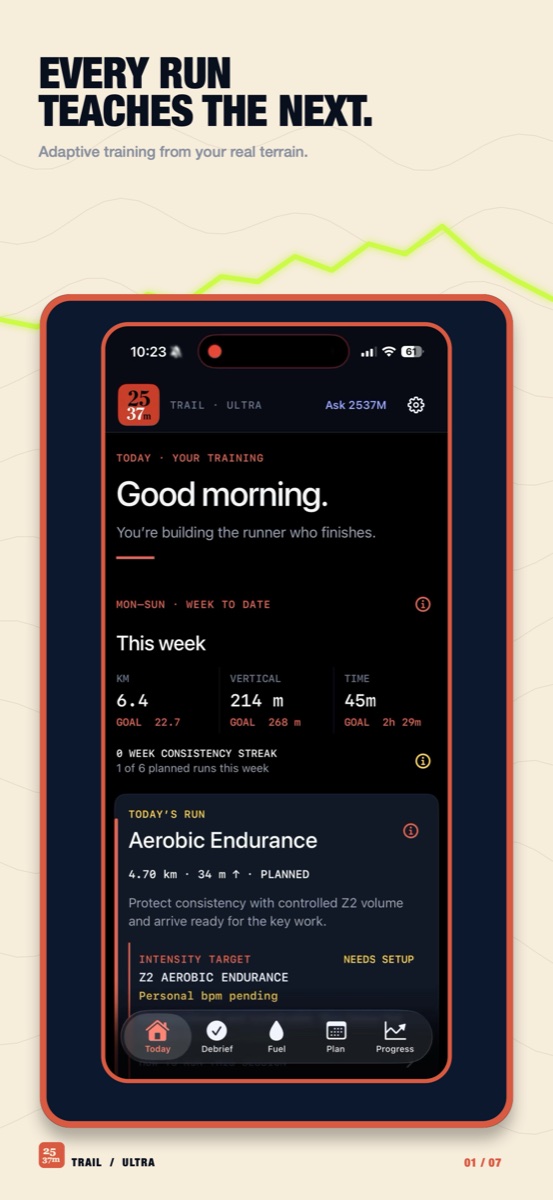
Bring completed training, terrain, recovery and body signals into the next decision.
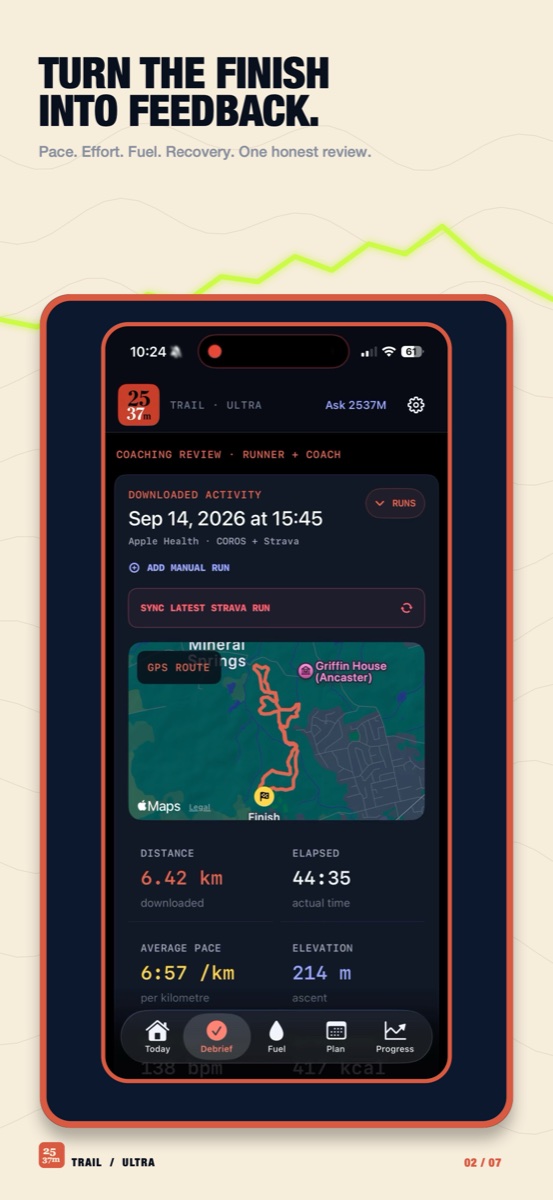
Review pace and effort alongside finish reserve, fueling, GI response and how your body felt.
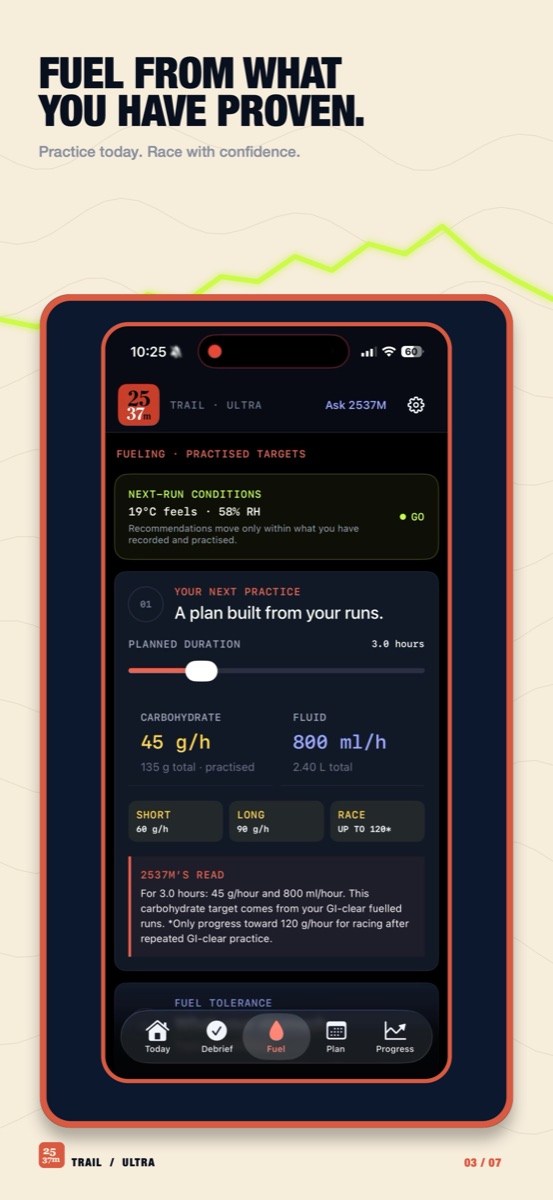
Record carbohydrate and fluid intake, then use tolerated practice to inform the next long run.
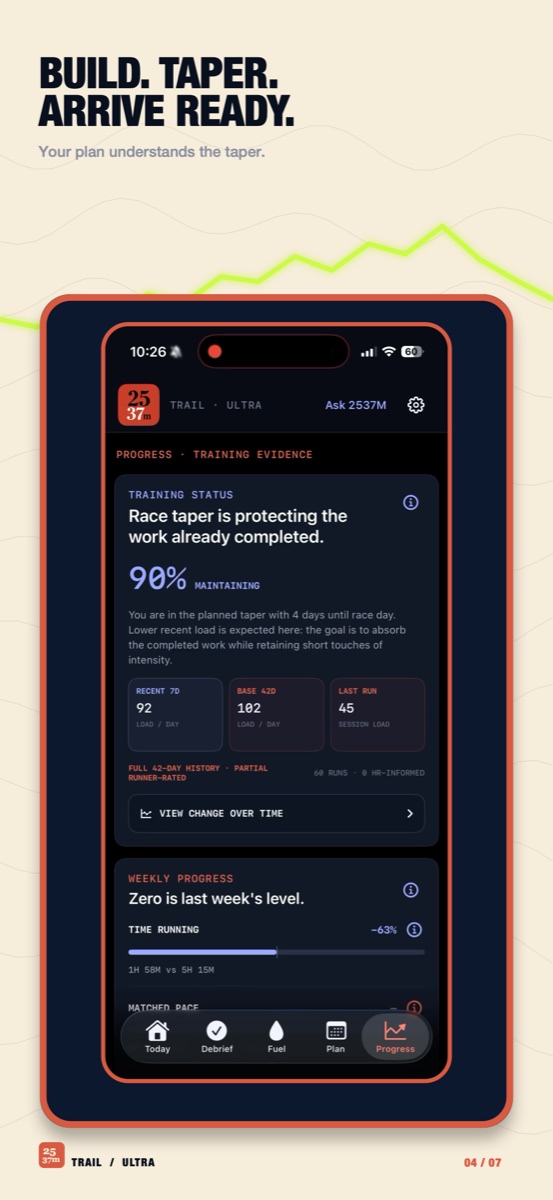
See the work ahead through race week, with future sessions adapting while completed runs stay intact.
App previews from the current private-testing build. Select an image to view it full size.
Bring the route and the evidence from your long runs together. Work through the race one leg at a time, then export a spreadsheet to organize supplies and share the plan with your crew.
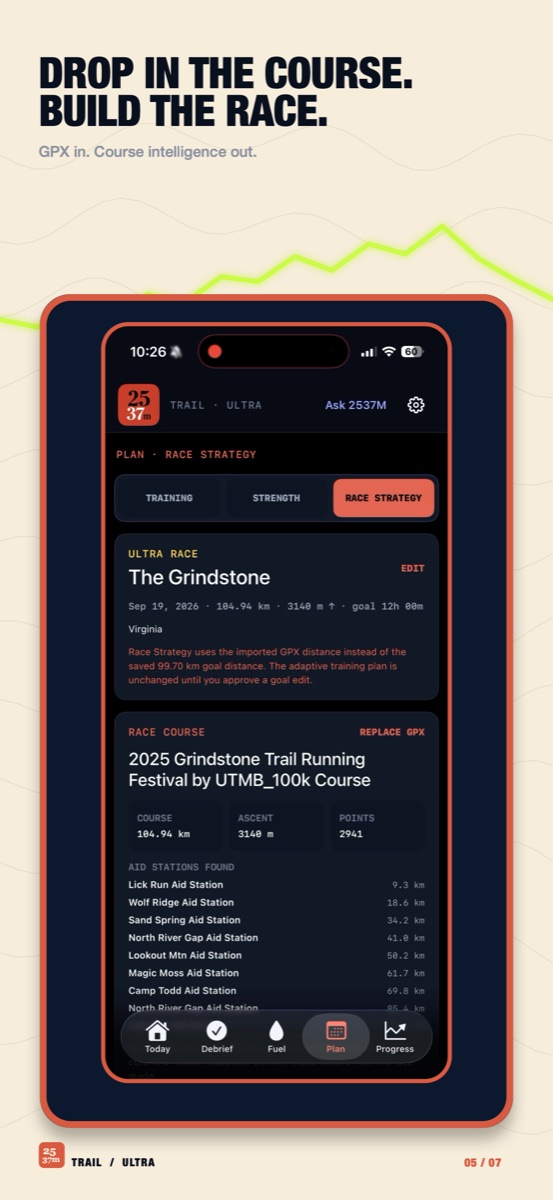
Import a GPX to see the route’s distance, ascent and named checkpoints. Add missing stops by distance from the start while keeping the original route intact.
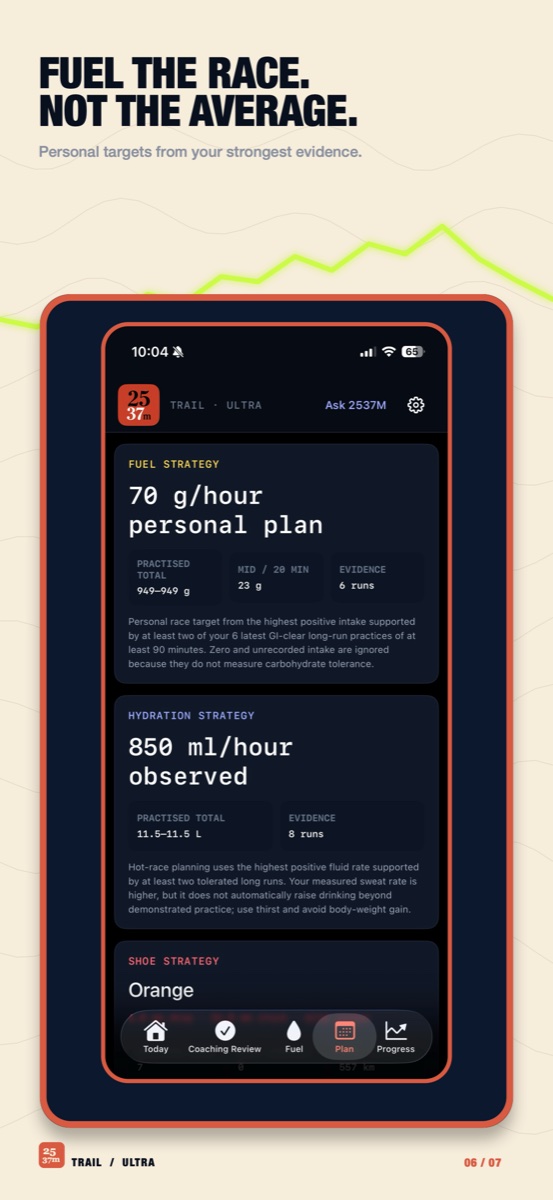
Build personal ranges from relevant long runs and tolerated intake. When the evidence is missing, the app tells you what still needs practising.
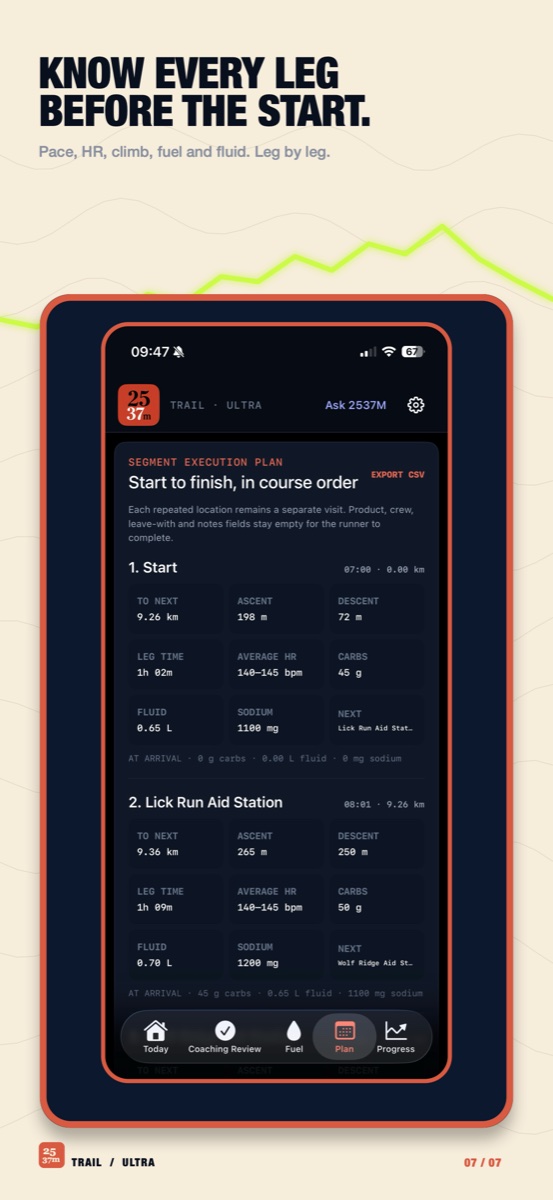
Review distance, climb, effort, fuel and fluid in course order. Export a planning CSV with space for your products, crew details and notes.
Race timing is an experimental estimate. Fuel and fluid guidance depend on your recorded practice and available evidence.
Import a GPX route or checkpoint CSV, or build a checkpoint list for a race without a course file. Review each leg and export a spreadsheet to organize supplies, crew instructions and notes.
CSV and manual plans do not create a GPS track. Terrain-based estimates require the relevant elevation data. Confirm checkpoint facilities and crew access with the current race guide.
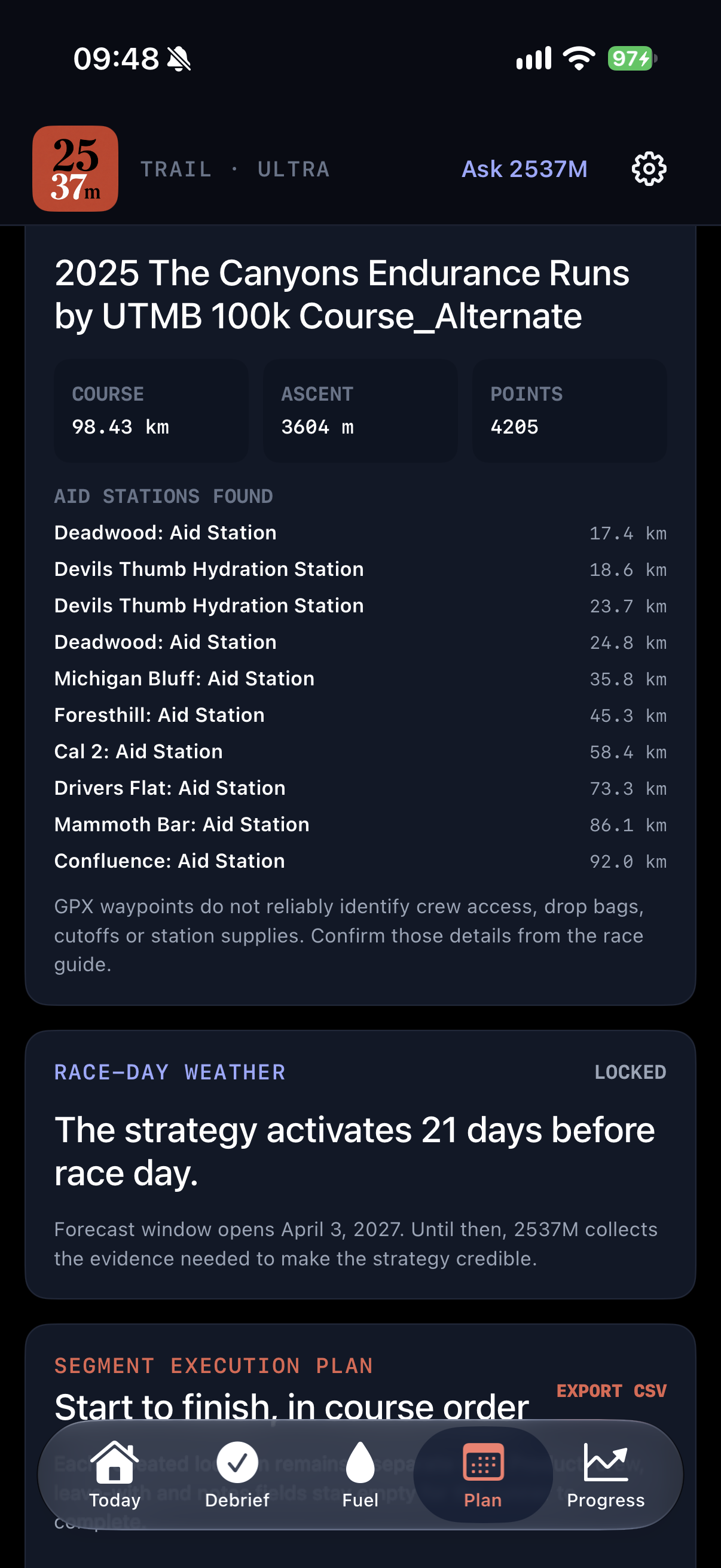
Review distance, ascent and the aid-station waypoints found in your GPX file. Confirm facilities, crew access and cutoffs with the race guide.
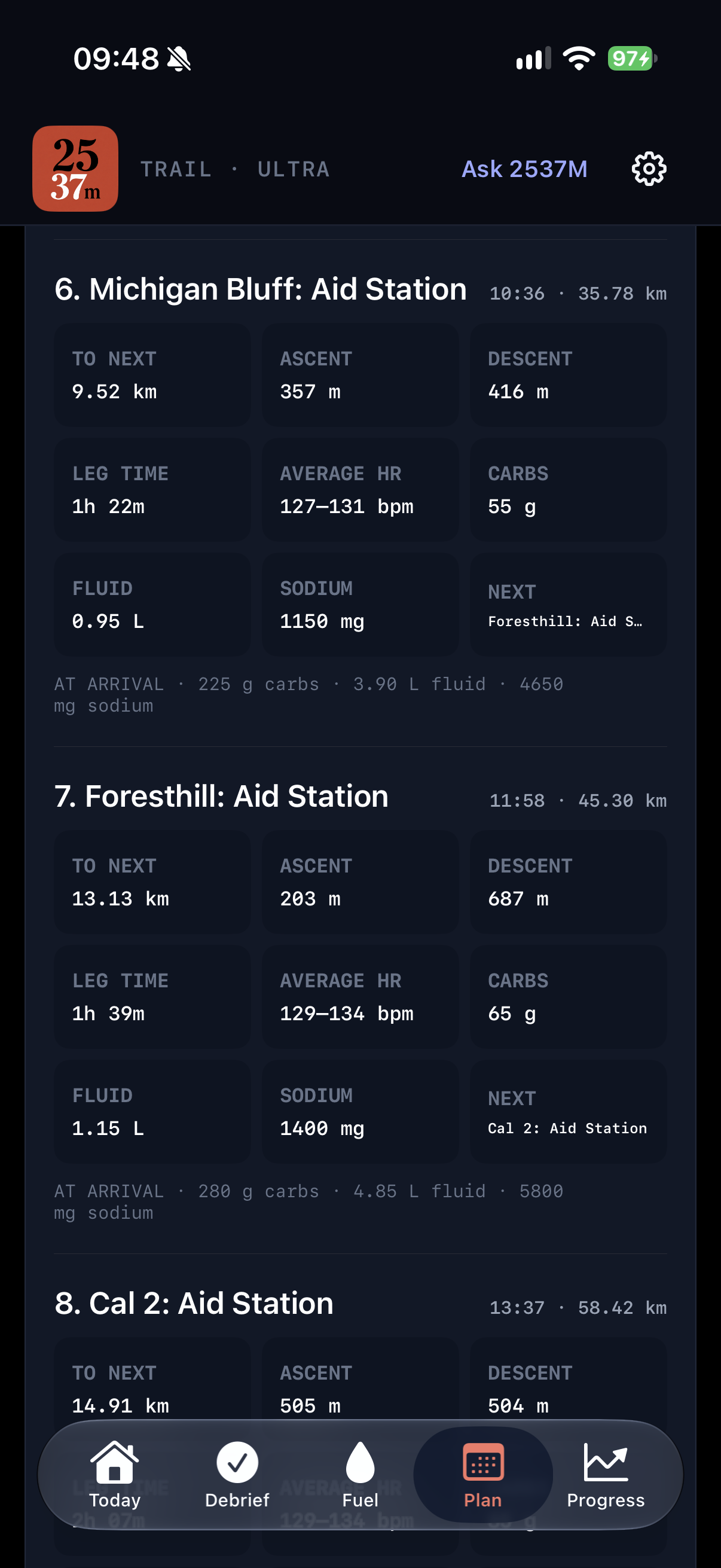
Review the next checkpoint, terrain, estimated time and effort alongside fuel and fluid planning figures, all in course order.
Screenshots: a Canyons planning example using a 2025 alternate-course GPX for a 2027 goal. Figures illustrate one runner’s plan; timing is estimated and intake is individual. The Grindstone worksheet below is a separate example.
See how a course is organized into legs in 2537m, with the route and segment strategy in one place. The worksheet below illustrates the practical details you can organize for race day.
Example shown: Grindstone, using a 2025 course file for a 2026 goal. Confirm current route and aid-station details with the organizer. Independent runner example.
Preview three legs from a working race spreadsheet, with all ten legs in the download. It includes timing, effort, elevation (m), carbs (g), fluid (L) and sodium (mg). Use the structure to organize your own race preparation.
Scroll sideways to see all columns.
| From | To next | Leg time | Planned arrival | HR to next |
|---|---|---|---|---|
| Start | 9.2 km | 0:58 | 6:00 | 135–140 |
| Lick Run 1 | 9.4 km | 1:10 | 6:58 | 135–140 |
| Wolf Ridge | 15.5 km | 1:55 | 8:08 | 138–142 |
Source: a personal Grindstone worksheet, prepared separately from the app export. Figures are individual planning targets, not race results or recommendations for another runner. The walkthrough and worksheet show different planning figures.
Defined calculations and evidence rules measure your training and look for trends across comparable runs. AI helps interpret that evidence and explain what it might mean, within the app’s planning limits. When there isn’t enough information to draw a conclusion, the app says so.
If 2537m tells you something is improving, you should be able to see what that conclusion is based on. Your experience remains part of the decision.
Activities, heart rate, sleep, HRV, elevation, weather and runner-entered feedback retain their source and timestamp.
Rolling load, durability, comparable-run trends and readiness components are labelled as estimates with confidence.
Plan adaptations explain the evidence used, respect ceilings and never treat a missed session as training debt.
2537m requests only the runner-authorized data needed to understand training, recovery and progress. Connections are read-oriented and can be revoked by the runner.
Completed workouts, duration, distance, route, elevation, heart rate, cadence, laps and available environmental context.
Used for the training record, rolling volume, load context and comparable-run analysis.Sleep, resting heart rate, HRV, daily activity and basic profile information when the source makes them available.
Used as supporting trends—not diagnosis, treatment or a definitive readiness verdict.Historical and newly available activities synchronized after the runner connects an account.
Used to avoid starting from zero and to preserve an existing training plan wherever practical.Account authorization uses provider-approved OAuth flows. Tokens stay on the server, access is limited to the approved scopes, and imported records retain source provenance. A runner can disconnect a provider and remove 2537m’s access.
2537m is in private testing on iPhone and Android. The screens shown here are from the iPhone build; public store availability has not yet opened.